© Sobolev Maksim / Unsplash
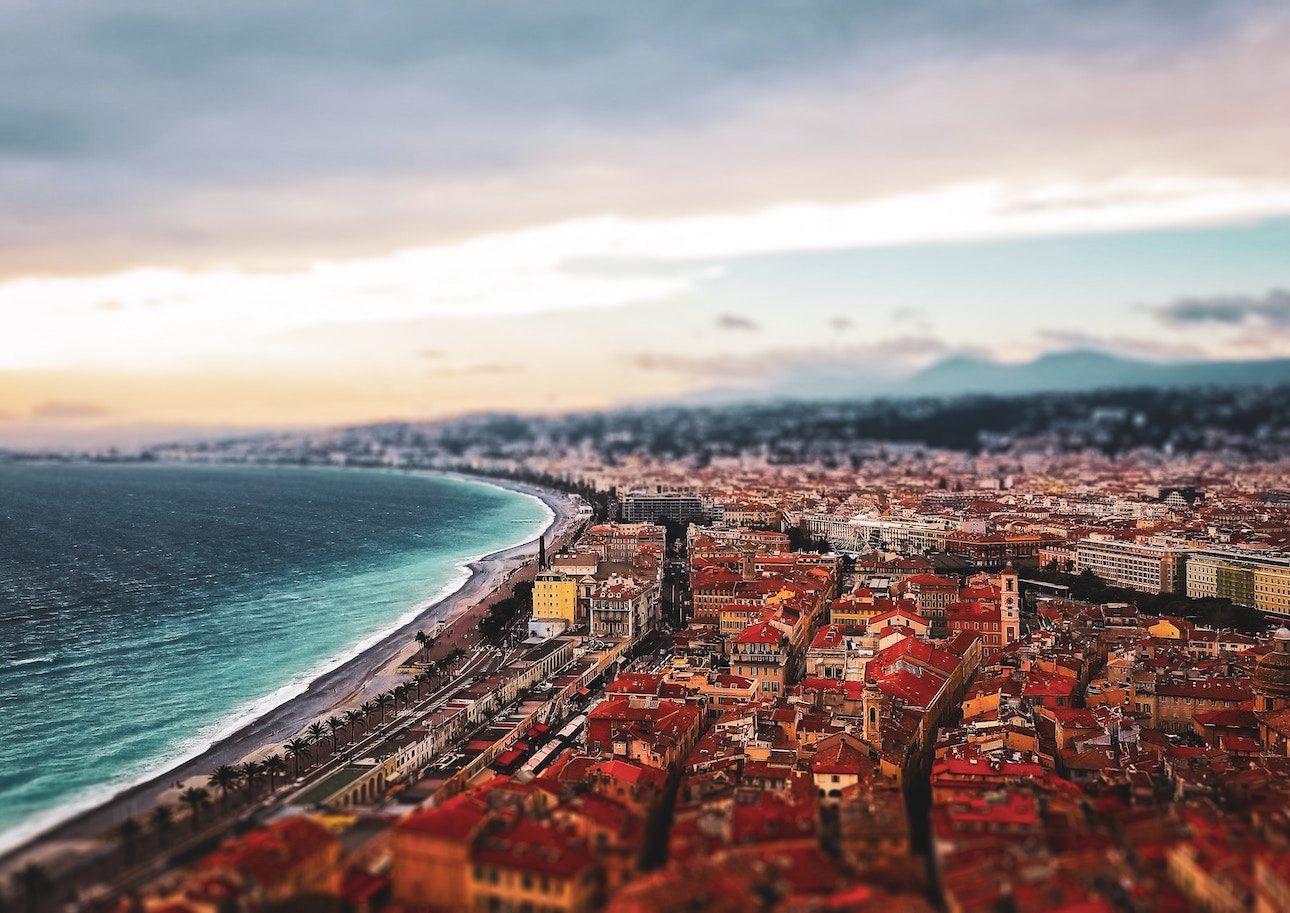
For anyone traveling the French Riviera with sustainability in mind, here are the best eco hotspots from Monaco through Nice to Cannes.
By Yann Jouet
Anyone craving extravagance under palm trees, pampered by the southern French sun, gravitates toward the Côte d’Azur. Stretched between the Mediterranean and the Alps, the French Riviera is an open invitation to live well. Our writer Eva set off on a “green” voyage of discovery along the azure coast and found that luxury isn’t the only thing taken seriously here — sustainability is too.
In this feature: ► L’Oiseau Bleu — Coiffure et Beauté au naturel ► Dame Nature — Organic Dining in St. Laurent du Var ► EKYOG ► Mercantour National Park ► Green Ways to Get Around ► A Small Principality, a Big Commitment: Prince Albert’s Environmental Legacy ► Fairmont Monte Carlo
L’Oiseau Bleu — Coiffure et Beauté au naturel
A truly special hair and beauty salon sits in the heart of Nice, just off the Place Rosetti: L’Oiseau Bleu. This enchanting spot is worth a visit on its own merits — I certainly left impressed. Owner Natalie Sisto, a warm presence in her own right, has poured her heart into this salon, and it shows the moment you walk in.
A trained colorist, Natalie began questioning her profession about a decade ago, and for good reason: the chemical ingredients found in industrial hair dyes were making her sick. On her own initiative, she began digging deep into the composition of synthetic hair colors and gradually developed her own dye built entirely on natural ingredients. Armed with that knowledge, she opened her salon, shaping it entirely around her own philosophy — and, with the help of two colleagues, built it into a real success.
L’Oiseau Bleu grew out of concern for her clients’ health as much as her own — for Natalie, going organic was never a trend, just “completely normal.” Her goal is for everything in the salon to be made in-house, from the hair dyes to the décor to the lighting.
Her philosophy centers equally on product quality and the client as a person. When we spoke, Natalie explained how important it is to her to really get to know each client’s personality and tailor her work accordingly. Conversation and connection take up a lot of space in this small salon. Rather than chasing some predetermined beauty ideal, Natalie’s aim is to bring out each client’s own natural, individual beauty.
Haircuts Timed to the Moon
One distinctive touch at the salon is its use of the lunar calendar for haircuts. Depending on the moon’s phase, a cut can influence hair growth and health — a claim that sounds esoteric at first, but Natalie explains it plainly: “I’m actually a fairly skeptical person myself. The reason I follow the lunar calendar in my salon comes down to one simple thing: it works. That the moon has real influence is obvious enough from tides — the ebb and flow. Hair isn’t so different; it responds to the same pull. Up until about 30 years ago, loggers timed tree-felling to the lunar calendar too. None of this is about magic. There’s evidence the moon affects us, and we put that to use in the salon.”
Natalie regularly consults Michel Gros’s lunar calendar and plans special events around it, centered on “bien-être et beauté” — wellbeing and beauty. The salon’s Facebook page keeps a running list of upcoming events.
L’Oiseau Bleu: 17 rue Gubernatis, 06000 Nice Tel. +33 (0)6 22 14 04 49 http://www.coiffeur-loiseau-bleu Reservations recommended. Opening hours: from May, every third Monday of the month 9am–5pm, Tue: 9am–8:30pm, Wed: 9am–6pm, Thu & Fri: 9am–7pm, Sat: 8:30am–6pm
Dame Nature — Organic Dining in St. Laurent du Var
True to the motto “you are what you eat,” Fabienne and Michel Vilain opened the organic restaurant Dame Nature in St. Laurent du Var twelve years ago. With sea views and a relaxed, modern atmosphere, it serves traditional southern French cuisine — sometimes reinterpreted, always built from fresh, natural ingredients sourced preferably from the region.
Fabienne Vilain explains that she and her husband work primarily with organic products. “The quality of what we serve and our guests’ satisfaction are always front and center. We don’t cook with something because it’s organic — we cook with it because it’s organic and it tastes exceptional,” says the restaurant’s owner. Only certified organic meat makes it onto the menu, fruit and vegetables come from an organic wholesaler in Grasse, and everything is prepared fresh on-site. Even the drinks are organic in origin.
The menu changes with the seasons and includes plenty of vegetarian and gluten-free dishes, alongside a daily special and the chef’s recommendation of the day.
Dame Nature: 167 Promenade des Flots Bleus 06700 St. Laurent du Var Tel. +33 (0)4 92 27 15 45
EKYOG
Fashion lovers are well taken care of on the azure coast too: both Cannes and Nice are home to boutiques of the French sustainable label EKYOG.
Founded in 2003 by Nathalie Lebas-Vautier, EKYOG is a green-glamour brand in the truest sense, marrying style with sustainability. The look is modern and feminine, and environmentally responsible to boot — what more could you ask for?
EKYOG’s fashion aims to set new standards and reinterpret timeless pieces for today. The brand respects both people and planet — in how its fabrics are made, processed, and transported, strict ethical guidelines and sustainability practices apply throughout. Materials are 100% organically grown, and even the furniture inside its boutiques is chosen with the environment in mind. Each year, 10% of sales proceeds go to the association Terre d’EKYOG, which supports environmental protection, health, and education for disadvantaged communities.
EKYOG Cannes: 10 rue d’Antibes 06400 Cannes Tel. +33 (0)4 92 59 32 87
Opening hours: Mon & Wed: 10am–1pm, 2pm–7pm Tue, Thu & Sat: 10am–7pm Tel. +33 (0)4 92 59 32 87
EKYOG Nice: 12 rue Alphonse Karr 06000 Nice Tel. +33 (0)4 93 91 27 18
Opening hours: Mon–Sat 10am–7pm
Online shop: ekyog.com
Mercantour National Park
Anyone with a soft spot for flora and fauna shouldn’t miss a visit to France’s Mercantour National Park. About an hour from Nice, the park spans the Alpes-Maritimes and Alpes-de-Haute-Provence departments.
Its unique position between sea and mountains has produced an exceptional diversity of species. Roughly 2,000 plant species and nearly 60 mammal species call the park home, including endangered animals like wolves and ibex. The landscape itself is just as remarkable and varied — across seven distinct valleys, visitors take in spectacular views of forests, mountains, lakes, and rich flora. One highlight is the “Vallée des Merveilles” — the Valley of Wonders — home to more than 36,000 prehistoric Bronze Age rock carvings.
As a crossroads between Provence, Nice, and Italy, Mercantour holds a wealth of architectural treasures from the Romanesque, medieval, and Baroque periods — 15th- and 16th-century chapels, old mills, wells, and farmhouses. The park is recognized as part of France’s historic cultural heritage.
Sustainable Tourism, Taken Seriously
The park’s stewards are fully committed to sustainable tourism. Working alongside various local partners, they aim to preserve the park’s biodiversity while helping visitors connect with it. Guided hikes, numerous information points, and WWF-recognized accommodations all support that mission. From hiking to canyoning, rafting, climbing, horseback riding, mountain biking, paragliding, and skiing, Mercantour’s mountains offer no shortage of activity, with a genuinely broad range of sporting options on hand.
Anyone staying longer than a day can choose from a range of campsites, hotels, and inns — everything from a rustic farmhouse to a luxurious four-star hotel, with something for every taste. Special packages are available too, including multi-day valley hikes with lodging and meals included, and options tailored to families with children. The park’s website lists the full range of offerings.
Getting there is easy by car, bus, or train. Regular buses run from Nice, Monaco, and Menton into the park’s valleys, with connections between the valleys themselves, and Nice also offers direct train access to the park.
*The park’s official website: *http://www.mercantour.eu
Green Ways to Get Around
The city of Nice has built a distinctive system to support environmental protection and sustainability across the metropolitan area. One affordable, eco-friendly way to explore the region is via the Vélos Bleus — the blue bicycles that, like the blue chairs along the Promenade des Anglais, have become an inseparable part of the city’s identity. Bike stations are scattered throughout Nice and its surroundings, offering cheap rentals. They’re a wonderful way to sightsee or take short trips around the area, as anyone who’s cycled the Promenade in the sun on a Vélo Bleu can attest.
To use a Vélo Bleu, you register online or by phone directly at a bike station, provide your banking details, and pay a registration fee — one euro for a day’s use, five euros for a week. After that, a quick call is all it takes before you’re in the saddle. The first 30 minutes are free; after that, it’s one euro for the first hour and two euros for each additional hour.
Since 2011, Nice and its surroundings have also had Autos Bleues, a car rental scheme that works on the same principle as the Vélos Bleus — with the notable difference that every vehicle is fully electric. It’s the city’s way of adding another clean, modern transport option to the mix. With a one-time registration fee of 25 euros and a valid driver’s license, an Auto Bleue can be rented for eight euros per hour or 50 euros per day.
All of which makes a compelling case for leaving the car behind and exploring the Côte d’Azur by more sustainable means.
*More information at: * http://www.lignesdazur.com/
A Small Principality, a Big Commitment: Prince Albert’s Environmental Legacy
Mention Monaco, and most people picture excess and luxury before environmental protection. And yet this small principality shows a genuinely striking commitment to nature and sustainability, driven largely by one figure: Prince Albert II.
Since taking the throne, the head of the House of Grimaldi has made environmental protection a defining focus of his work. During a 2006 expedition to the North Pole, the Prince witnessed the effects of climate change firsthand. That same year, he signed the Kyoto Protocol and launched his own environmental foundation.
The Prince Albert II of Monaco Foundation champions renewable energy, climate protection, clean drinking water, and biodiversity conservation. It funds and supports an unusually wide range of projects, including breeding and reintroduction programs for Bonelli’s eagle and the bearded vulture. The foundation also maintains numerous partnerships — among them one with the Monégasque organization EauNergie, which builds renewable-energy-powered desalination systems for regions where drinking water is scarce and seawater plentiful.
The Prince’s foundation aims to build networks connecting researchers, businesses, and individuals, and maintains offices around the world, including in Germany. A further expedition to the South Pole in 2009 brought renewed public attention to the dangers of climate change, spurring further scientific research in the field. That same year, at the Prince’s initiative, a trade ban was enacted on the endangered bluefin tuna — and Monégasque restaurants have kept it off their menus ever since.
So alongside the jet-set lifestyle Monaco is known for, there’s plenty of room for sustainability and environmental awareness in the principality. Bravo, Albert.
The official website of the Prince Albert II of Monaco Foundation: www.fpa2.com/home.html
Fairmont Monte Carlo
Sustainable travel and the full-blown luxury the Côte d’Azur is famous for aren’t mutually exclusive — as proven by the Fairmont Monte Carlo Hotel in Monaco.
This exclusive four-star resort, set in an unbeatable location between the Mediterranean and the Casino, offers everything a discerning traveler could want, combining the extravagance the principality is known for with a genuine commitment to the environment. It’s been recognized repeatedly for that commitment — including in 2011, when it received three “green keys,” an honor from the Green Key program for outstanding environmental performance.
Fairmont Monte Carlo maintains numerous partnerships, including with the WWF and the Prince Albert II of Monaco Foundation. Every material used throughout the hotel comes from environmentally responsible manufacturing, and electric cars are available for guests to rent. Head chef Philippe Joannès and his team favor regional and organic ingredients at the hotel’s own restaurant, L’Horizon, and offer an extensive range of vegetarian dishes.
Anyone seeking calm and pampering will find it at the Willow Stream Spa. The hotel’s in-house spa works exclusively with internationally recognized brands specializing in natural ingredients, including Kerstin Florian, Aromatherapy Associates, and Jane Iredale.
Fairmont Monte Carlo has also created a special “green” package for guests: the Green Dream offer includes an overnight stay for two in a deluxe sea-view room with breakfast buffet, plus two tickets each to Monaco’s Oceanographic Museum and Exotic Garden, starting from €419 per night.
More information on the hotel is available at: http://www.fairmont.com/monte-carlo/