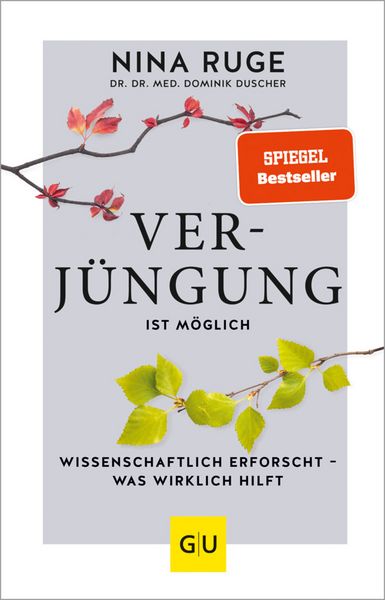
Want to live a long, healthy life? Read on. Longevity expert Nina Ruge has released a new book, “Verjüngung ist möglich” (Rejuvenation Is Possible), laying out the latest findings from longevity research in clear, accessible terms.
Everyone wants to live long and stay healthy while doing it. So what does a lifestyle built for longevity actually look like? Broadcaster, biologist, and science journalist Nina Ruge set out to answer exactly that in her new book.
Sooner than we’d like, we’re all forced to confront the harder questions about aging: Is the pace of our physical decline written into our genes, or can we actually influence how those genes behave? Can a genuinely “rejuvenating lifestyle” help us age more healthily? In Verjüngung ist möglich, Nina Ruge goes searching for that lifestyle — one grounded in real science. She offers a personal look at her own vitality along the way: having her bloodwork analyzed, sharing her experience with hormone replacement therapy, and undergoing an epigenetic test to determine her biological age. In Verjüngung ist möglich, she’s remarkably candid about what she finds.
-
What should a longevity-focused diet actually look like? Low carb, keto, the sirtuin diet, the Mediterranean diet, high-protein eating — turns out none of them come highly recommended.
-
How should we breathe? Not through the mouth — we need nitric oxide! And does slowing your breath actually help?
-
We already know a fair amount about how exercise and movement affect our cells — but what’s the right balance between endurance and strength training? Are both essential?
-
Cold chambers and sauna sessions — what do they actually do, and where’s the risk?
-
How much does good sleep matter for healthy longevity? What happens when you never reach deep sleep?
-
The twelve most important tips for preventing dementia — and, surprisingly, tip number one is a hearing aid.
-
Supplements have flooded the market for years. Which ones are actually backed by solid research and genuinely support healthy longevity? A full rundown on secondary plant compounds like curcumin, quercetin, and fisetin, plus vitamins, minerals, and coenzymes.
-
Prof. Michael Ristow of ETH Zurich shares his own, slightly unconventional top five for longevity.
-
The new boosters for our cellular power plants: NR, NMN — or maybe just vitamin B3? Yes, researchers actually rate these boosters positively.
-
Hands off the antioxidants! Free radicals are far better than their reputation suggests.
-
Hormone replacement therapy for women in menopause: the confusion stirred up by certain studies, and the clear recommendation from “hormone guru” Prof. Johannes Huber.
And here are 5 longevity life hacks from Nina Ruge
-
Eat organic vegetables. Untreated vegetables have to defend themselves against pests, and the very compounds they produce to do that are the ones that do our bodies good. Conventional vegetables simply can’t compete.
-
Take a midday nap. A power nap after noon, but no later than 3pm, for a maximum of 30 minutes, strengthens the mitochondria.
-
Try intermittent fasting. The 16/8 method supports cell repair and fat loss.
-
Take cold showers. Just 30 seconds in the morning is enough. The cold prompts the body to convert excess fat into its own cellular energy plants.
-
Breathe calmly into your belly. Slow, deep belly breathing brings the body into a state of relaxation.
The book is published by Gräfe und Unzer Verlag.