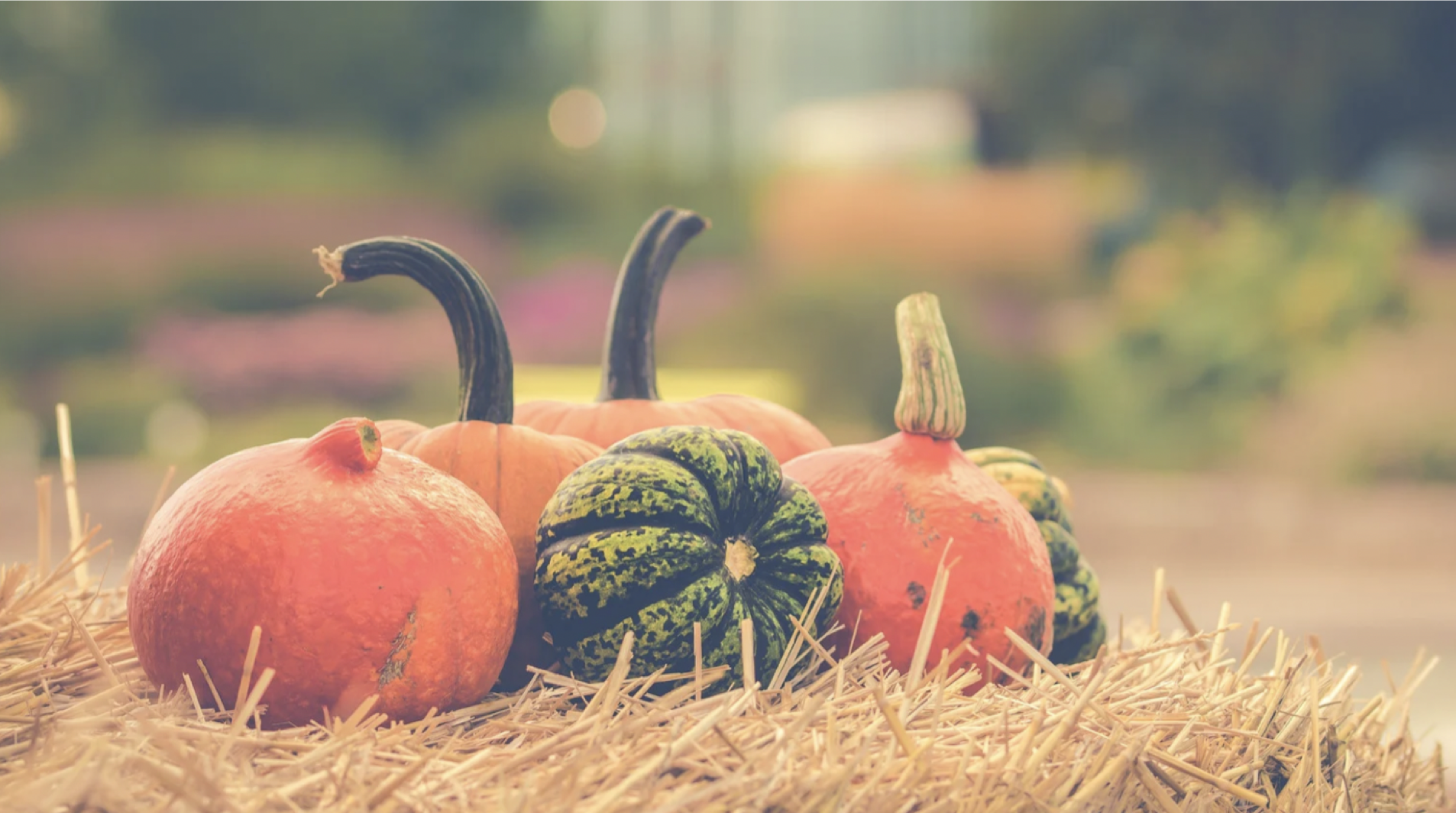
From September through January, pumpkin has its season. We look at what makes it worth knowing — the varieties, the health benefits, and above all, why it’s so good for you. Plus, three recipes worth trying: risotto, savory potato dumplings, or pumpkin with hazelnut cream.
Pumpkin has earned its reputation as a genuine superfood. It originated in the Americas, but today it’s grown almost everywhere.
Its versatility is part of the appeal — pumpkin can be boiled, roasted, baked, or air-dried, and while it can technically be eaten raw, it isn’t particularly enjoyable that way. The classic preparation is probably pumpkin soup, built on potatoes, onions, and cream, though the possibilities from there are essentially endless. The seeds make a good snack on their own, or scattered over a salad, and they’re also pressed into pumpkin seed oil — a rich, nutty oil best kept away from heat and used instead as the perfect salad dressing.
Culturally, pumpkin is probably most associated with the United States, where it takes pride of place on the Thanksgiving table. It plays an equally central role at Halloween: hollowed out, carved into a face, and lit from within to stand guard as spooky decor on doorsteps at the end of October.
There’s a striking range of varieties, though it pays to know the difference — not all of them are edible. Ornamental gourds can cause stomach upset and nausea. Among the edible types, Hokkaido and butternut are the best known, and you’ll find both in every supermarket come autumn. Beyond those, there’s the Sweet Dumpling, the giant pumpkin, the small Tondo Chiaro di Nizza, and the unusual Summer Satellite. Spaghetti squash lives up to its name — its fibrous flesh really does separate into strands like pasta — while Small Sugar Pie is the variety of choice for American-style pumpkin pie.
So why is it so good for you?
The short answer: pumpkin is packed with vitamins, minerals, and fiber. It contains beta-carotene, vitamin C, and vitamin E, prized for its antioxidant properties. On the mineral side, it delivers potassium, magnesium, calcium, and iron — the last of which plays a key role in transporting oxygen through the blood.
Fiber is something of a quiet miracle worker: it fills you up without piling on calories. Because it takes longer to chew and lingers longer in the stomach, it keeps you satisfied for longer, and it also helps usher cholesterol out of the body.
Below, three pumpkin recipes worth making this season:
Pumpkin and Gorgonzola Risotto
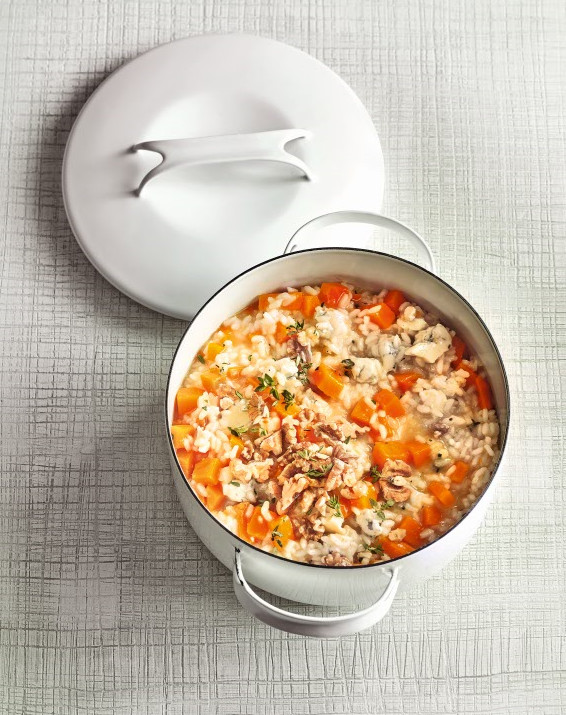
Serves 4, 50 min. preparation, approx. 595 kcal per serving
450g turban squash (or substitute butternut squash), 1 onion, 1 clove garlic, 2 sprigs thyme, 1 liter vegetable stock, 2 tbsp butter, 250g risotto rice (such as Arborio), 200ml dry white wine, 40g walnuts, 200g Gorgonzola, salt and pepper
1 Peel the squash, remove the seeds and fibers, and cut the flesh into roughly 1cm cubes. Peel and finely dice the onion and garlic. Wash the thyme, shake dry, strip the leaves, and chop finely. Heat the vegetable stock and keep it warm, covered.
2 Melt the butter in a large pot over low heat and sauté the onion and garlic until translucent. Add the risotto rice and toast, stirring, for about 30 seconds until glossy, then deglaze with the white wine. Let it simmer uncovered over medium heat, stirring occasionally, until the wine has nearly cooked away.
3 Stir in about two-thirds of the hot stock along with the pumpkin cubes and thyme. Cook uncovered over medium heat for about 20 minutes, until tender but still with a slight bite, stirring now and then — but not too often, so the pumpkin cubes stay intact. Add the remaining stock gradually as needed. Meanwhile, toast the walnuts in a dry pan until fragrant, then let them cool and chop roughly.
4 Cut the Gorgonzola into pieces and fold it gently into the finished risotto, taking care not to break up the pumpkin. Season with salt and pepper, divide among deep plates, scatter with the walnuts, and serve.
This and more recipes to try can be found in the cookbook:

Tanja Dusty — Kürbis GU Küchenratgeber, Gräfe & Unzer, 3rd edition, 2018 More info at: https://www.gu.de/
Savory Pumpkin Dumplings
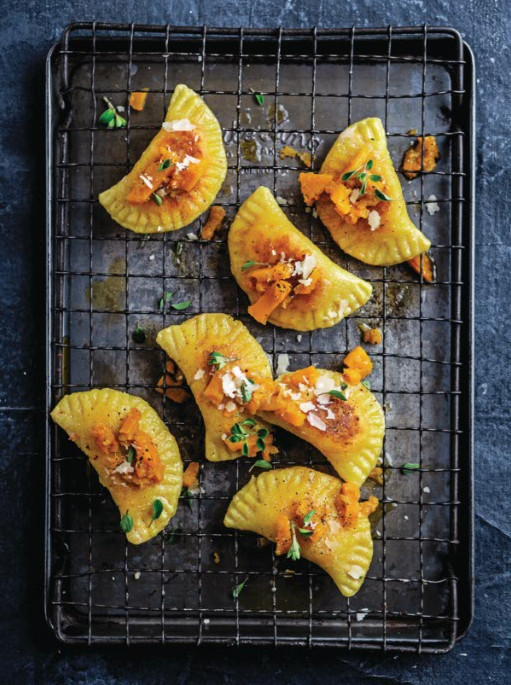
Makes 16 pieces (approx. 11cm in diameter)
Filling: 2 tbsp butter, 1 onion, finely chopped, 2 tbsp finely chopped ginger, 600g butternut squash, cut into cubes, ground coriander and ground cumin (or a “Flotter Zweier” spice blend), freshly milled pepper, salt (or a “Scharfer Fünfer” blend), 2 tbsp vegetable stock, 2 tbsp finely chopped parsley
Potato dough: 500g starchy potatoes, 2 tbsp butter, 120g flour, 30g semolina, 2 egg yolks, freshly grated nutmeg, salt
Also: 125g butter for frying, coarsely shaved cheese to serve, as desired
For the filling, foam the butter in a pan and briefly sauté the onion and ginger. Add the pumpkin cubes and cook for a few more minutes. Season with the coriander and cumin (or spice blend), pepper, and salt. Add the vegetable stock and reduce the heat.
Cover and let the pumpkin steam gently for about 20 minutes until soft. Set a few pumpkin cubes aside. Roughly mash the rest with a potato masher, stir in the parsley, and let the mixture cool.
For the dough, boil the potatoes in their skins, drain, peel while still hot, and press through a potato ricer. Combine quickly with the butter, flour, semolina, egg yolks, nutmeg, and salt. Let the dough rest briefly, then roll out to about 3mm thick. Cut circles roughly 11cm in diameter from the dough. Spoon the pumpkin filling onto each, fold into half-moons, and press the edges firmly to seal.
Cook the dumplings in gently simmering salted water until they rise to the surface. Lift them out, fry briefly in butter, and serve with the browned butter, a scattering of shaved cheese, and the reserved pumpkin cubes.
Tip: leftover meat ragout also makes a delicious filling for these potato dumplings.
This and more recipes can be found in the cookbook:

Frau Kaufmann kocht. Klassisch. Überraschend. Einfach. AT Verlag, Aarau and Munich, 2019 More info at: https://at-verlag.ch/
Pumpkin with Hazelnut Cream and Herbs
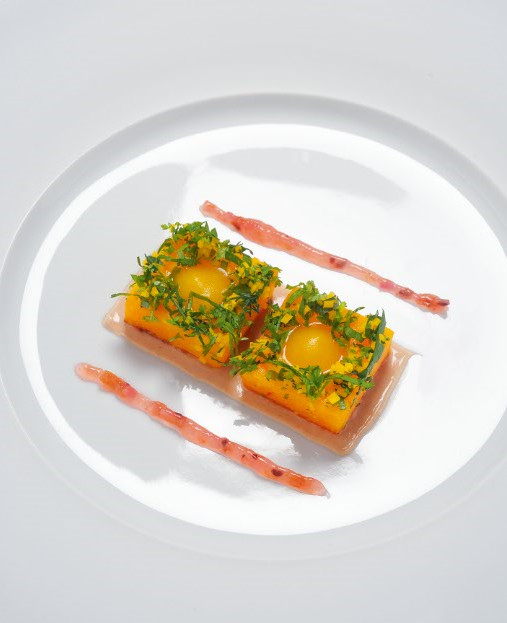
Serves 4
Hazelnut cream (24 hours standing time): 150g hazelnuts, 250ml water, salt and pepper, chili oil
Pumpkin: 1 butternut squash, olive oil, salt and pepper, juice of half a lemon, chili oil, approx. 20g butter, 6 tbsp finely chopped mixed herbs, e.g. salad burnet, dill, chives, chervil, marjoram
Gooseberry chutney: 250g red gooseberries, 1 small red chili, 80g onion, 4 slices ginger (approx. 0.5cm thick), 160g jam sugar (2:1), 1 tbsp lemon juice
Preparation
Hazelnut cream:
Place the hazelnuts in a Pacojet canister. Bring the water to a boil, pour it over the nuts, and let cool. Seal the canister and freeze for at least 24 hours. Process shortly before serving, then season the hazelnut cream with salt, pepper, and a few drops of chili oil.
Gooseberry chutney:
Pick over, trim, and quarter the gooseberries. Wash the chili. Peel the onion and dice very finely. Combine the gooseberries and chili with the diced onion, ginger slices, jam sugar, and lemon juice, and bring to a boil.
Simmer for about 3 minutes. Remove the ginger slices and chili, pour the chutney into sterile jars, and let cool. To serve, finely chop 6 teaspoons of the chutney.
Pumpkin:
Peel the pumpkin and use a square cutter (3cm sides) to cut 8 squares, each 1.5cm high. Using a 1cm round cutter, punch a hole through the center of each square. Remove the seeds from the remaining pumpkin flesh and cut about 2 tablespoons of it into a very fine brunoise. Put all the remaining pumpkin trimmings in a pot, cover barely with water, and add a splash of olive oil. Bring to a boil and simmer over medium heat until the pumpkin is soft, then press everything through a cloth. Reduce the collected pumpkin juice to a syrup and season with salt, a little lemon juice, and a few drops of chili oil. Keep the pumpkin juice at room temperature.
Coat an ovenproof pan with a little olive oil and heat it. Add the pumpkin squares and place a small piece of butter into the hole in the center of each. Cook the squares in a preheated oven at 180°C (top and bottom heat) for about 6–8 minutes, until lightly browned on the underside. Season with salt and pepper. Toss the pumpkin brunoise with the herbs and season with lemon juice, olive oil, salt, and pepper.
To plate:
Arrange the chilled hazelnut cream in a strip across each plate. Scatter the pumpkin with the herbs and set it on top of the hazelnut cream. Fill the holes in the pumpkin centers with the pumpkin juice. Draw two lines of gooseberry chutney alongside.
This and more recipes can be found in the cookbook:
Das große Gemüsekochbuch — Andree Köthe / Yves Ollech Tre Torri Verlag, 2019 More info at: Bücher König